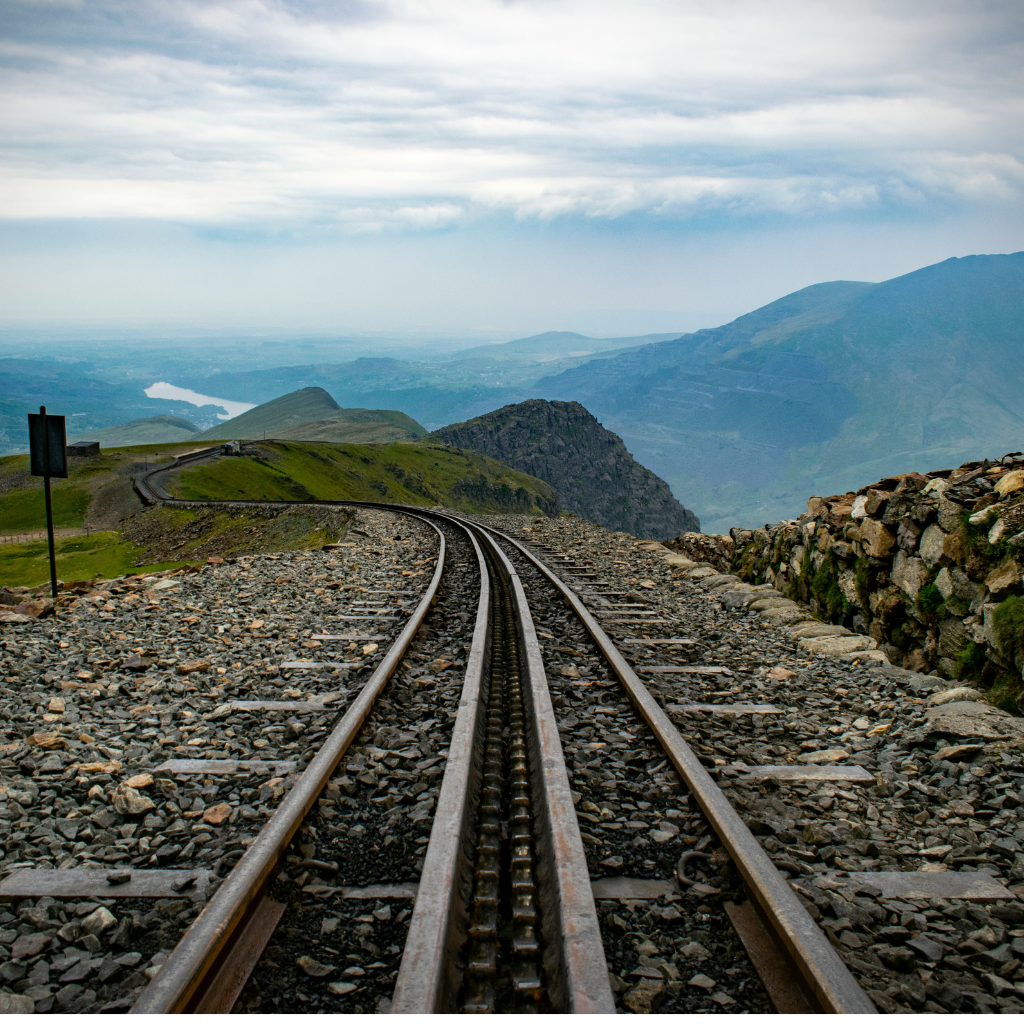
Ultimately the Snowdon Mountain Railway began as a bold Victorian idea: build a rack and pinion railway from Llanberis to the summit of Yr Wyddfra (Snowdon). Having recently visited on a family holiday I can highly recommend a visit and a journey on board. My railway nerd tingles were very excited. If you get the chance to go, you simply must.
Since it opened in 1896 over 12 million people have travelled on it so I’m guessing they all agree with me, at least on some level. I went up on a very foggy, windy and cloudy day so the views weren’t quite as epic as the pictures
Construction
The first proposal for the ambitious railway was bought forward by Sir Richard Moon who worked for the London & Northwestern Railway (L&NWR) after a nearby railway line opened.
There was opposition to the idea by local landowner – George William Duff Asheton-Smith – who was concerned that any proposed railway would spoil the picturesque landscape.
George changed his mind when in 1893, a narrow gauge railway changed it’s station name to “Snowdon” and tourists started to visit there instead taking away money from George and other hotels and businesses so the railway was going to be built to bring back the money and tourists.
There was a side mission though, the railway would allow everyone to reach the summit of Yr Wyddfra, not just those with good hiking boots. And that’s still true today, the railway makes the summit of the mountain accessible to all.
Rack and pinion
Trains don’t do well on hills. They just aren’t designed to go up them. So the Snowdon Mountain Railway would need a different type of railway design to be able to reach the top. The wheels just wouldn’t grip the rail and you’d end up falling back down the slope or just being stuck at the bottom. Not the most impressive tourist attraction right? They needed a system.
And that system, was rack and pinion.
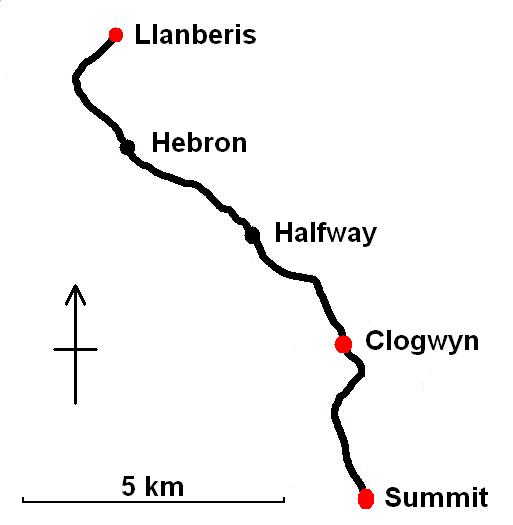
The Snowdon Mountain Railway is the only rack and pinion railway in the UK- but what does that even mean? What is a rack and pinion railway? The technology had existed in Switzerland and that’s where the newly formed team travelled to not only learn more, but create very useful contacts.
Why reinvent something that had been working successfully for so long?
A one-line description is there is a toothed rack running up the middle of the track and the locomotive uses a gear wheel (the pinion).
Actually, it really doesn’t have to be anymore complicated than that really, does it? Why over complicate something that is pretty straightforward. I think the picture below shows it better than my descriptions ever could.
Construction
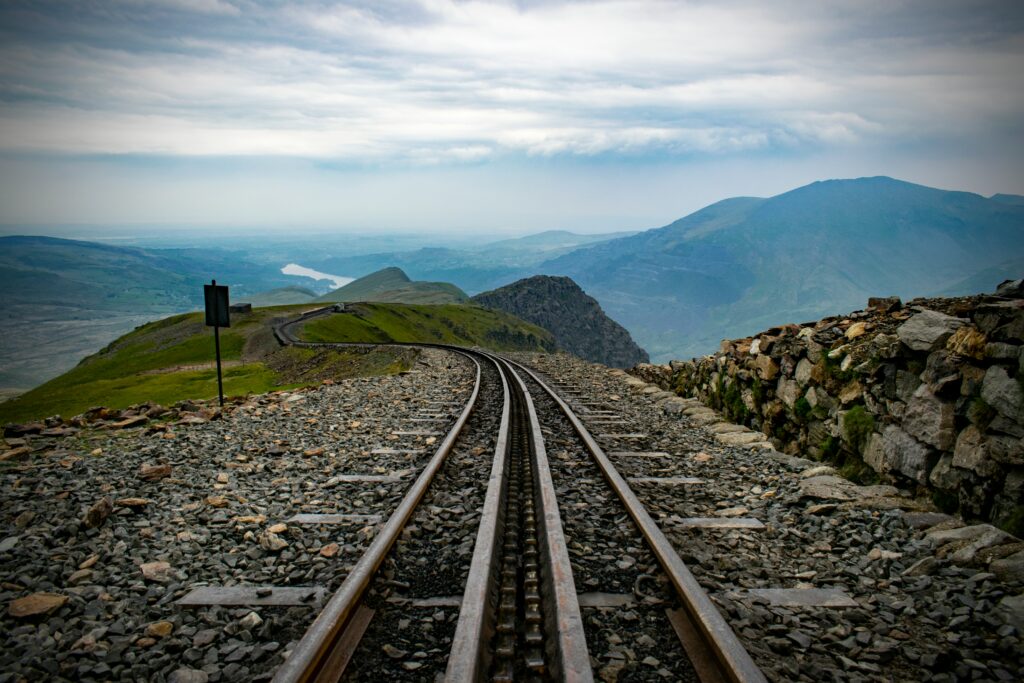
The Snowdon Mountain Railway was built between December 1894 and February 1896 at the cost of £63,800 which is roughly £10 million in today’s money. Expensive right? There was a workforce of 150 workers to bring the ambitious railway to life. They used dynamite and shovels to build the 8km of railway track.
Remember, building a railway with nothing more than hand tools was impressive at the best of times but these 150 workers built a railway track up the side of a mountain and in just 14 months. This is a railway which ends 1,065 metres (3,493 feet) above sea level.
This sounds high and I don’t mean to take away the impressive nature of its construction- because trust me, it is impressive- but there are higher railways in the world.
| Qinghai–Tibet Railway | 5,072 m | China | Highest railway on Earth |
|---|---|---|---|
| Peru’s Central Railway | 4,829 m | Peru | One of the steepest “normal” railways |
| Jungfraubahn | 3,454 m | Switzerland | Highest in Europe |
| Snowdon Mountain Railway | 1,065 m | UK | Highest in Wales/England, but low by world standards |
Obviously if Snowdon was higher I have no doubt the workers would have found a way to still reach the top.
There were five steam locomotives ordered from the Swiss Locomotive & Machine works: L.A.D.A.S, Enid, Wyddfa, Snowdon and Moel SIabod.
Despite the highly dangerous building conditions there were thankfully no casualties during construction.
Not a great opening
The railway opened on the 6th of April 1896.
As I explore in my book – The Not-So-Romantic Railways: Crashes and Accidents– the last thing you want is some sort of crash or accident happening on your railway, particularly on the day of opening.
Sadly, the Snowdon Mountain Railway suffered a disaster on their opening day on the 6th of April 1896.
The foggy day started off well with a large crowd cheering the locomotives L.A.D.A.S which stood for “Laura Alice Duff Assheton-Smith” and ENID as they set off on their way up the mountain.
A locomotive named L.A.D.A.S started off with two successful runs with passengers to the summit. On its return trip and the very first public descent L.A.D.A.S derailed due to the pinion wheel losing grip of the rack rail.
One passenger sadly died after jumping from the carriage- there was actually two passengers who jumped after seeing the fireman and driver jumping to safety- those who stayed aboard all survived thanks to the carriages automatic brake.
L.A.D.A.S ended up being destroyed as it plummeted over the edge and the line was instantly closed in order to add new safety features including a gripper rail.
I’ve been trying to figure out how best to describe a gripper rail and I think I’m going to go with that it’s like a seatbelt for the train that stops the train from bouncing or lifting off the track when travelling up the mountain.
There’s a metal bar running alongside the track and under the train are some hooks which sit over that metal bar and if there is a bounce or wobble the hooks catch the train on the bar. You could look at it like the safety bar on a rollercoaster seat, the ride will be bouncy, but the safety bar stops you from hurtling out your seat.
Thank goodness for safety devices, eh?
The locomotive ENID actually collided with the now evacuated carriages due to low visible through the fog which sent them hurtling down the track. Luckily a pointsman used some quick thinking changed the points to derail them to avert a disaster escalation.
The new safety feature did its job, there’s not been a fatal accident since.
Just whilst we’re talking about safety features here’s another one for you. The carriages are not physically coupled to the locomotive. Instead, gravity keeps everything connected. This means if something goes wrong the locomotive will not pull the passenger carriage- which has its own brake- with it.
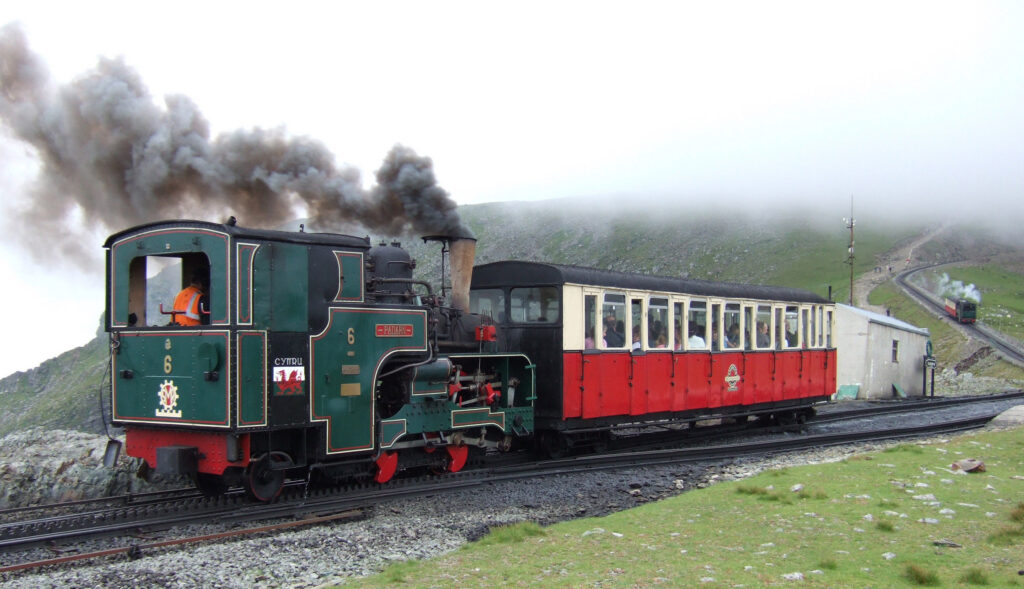
The locomotives
| Era | Locomotive type | Names | Notes |
|---|---|---|---|
| 1896–1920s | Swiss steam | L.A.D.A.S., Enid, Wyddfa, Snowdon, Moel Siabod | Five originals built by the Swiss Locomotive & Machine Works. |
| 1922–24 | Swiss steam (new batch) | Padarn, Ralph, Eryri | Added to expand service; still in use for heritage runs. |
| 1986–1992 | Hunslet diesel | George, Peris, Snowdon, Wyddfa, Moel Siabod | Built in Leeds; replaced steam for daily operations. |
| 2020–present | Clayton hybrid diesel‑battery | Snowdon Mountain Railway No. 10 and No. 11 | World’s first hybrid rack‑and‑pinion locomotives, cutting fuel use and emissions. |
I didn’t add it to the table because I wanted it to look neat and tidy but Wyddfa and Moel Siabod from the origional batch are still in service today which is an incredible feat to say the least.
The Snowdon Mountain Railway is a Victorian engineering gamble that survived a not-so-romantic debut to become one of Britain’s most iconic tourist railways- still climbing Yr Wyddfa 130 years (at the time of writing) later.
The Snowdon Mountain Railway is a Victorian engineering gamble that survived a not-so-romantic debut to become one of Britain’s most iconic tourist railways- still climbing Yr Wyddfa 130 years (at the time of writing) later.